

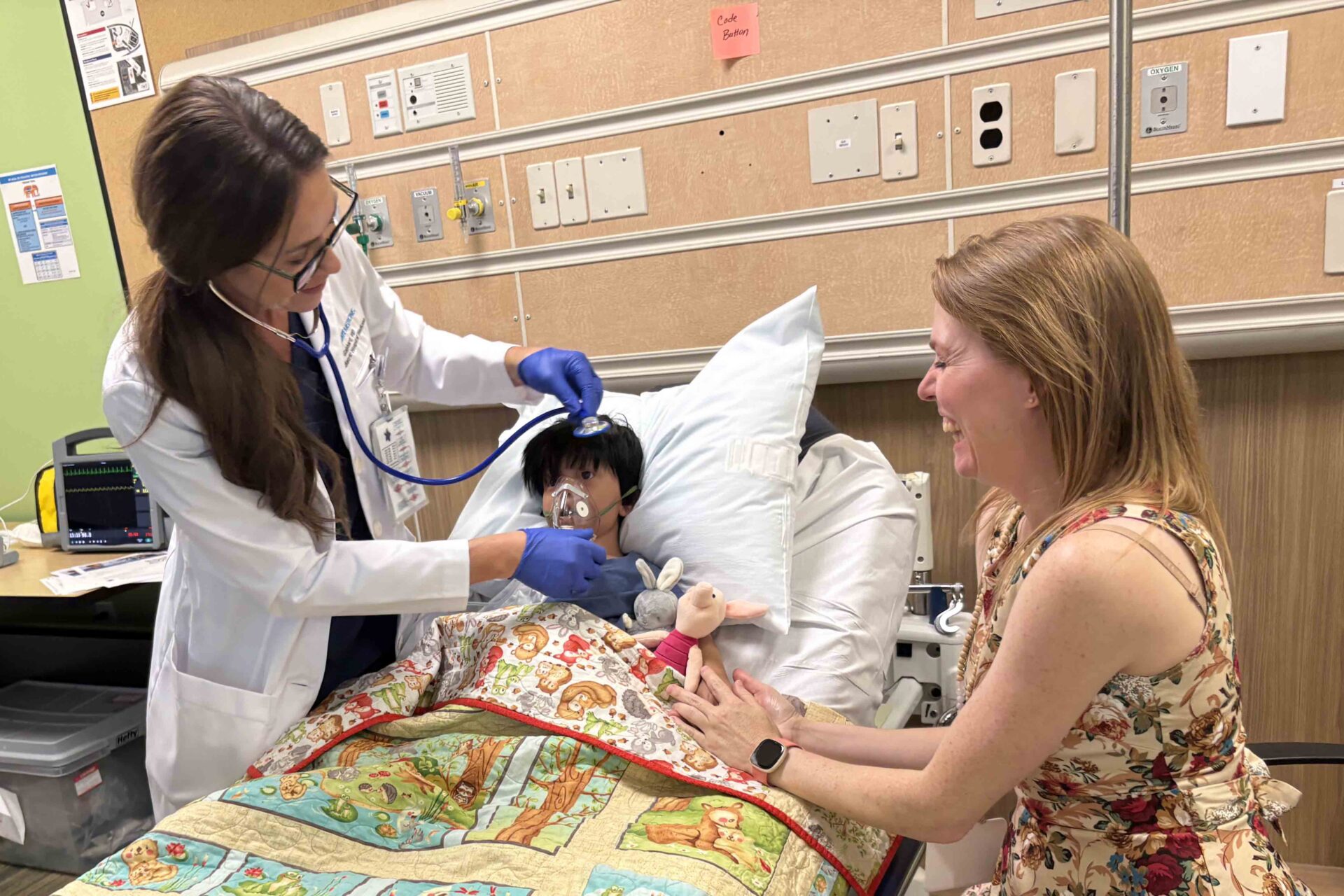
A doctor evaluates a child with thick brown hair and big, brown eyes. The patient has a high fever. He is coughing and says he doesn’t feel well.
In another room, a woman is giving birth, but the baby’s shoulder is stuck. Clinicians explain to the exhausted patient the steps they will take together to deliver the child safely.
Neither of these patients is real. The child is a “high-fidelity” mannequin that can make sounds, speak, and have vitals taken. The woman is a real person pretending to be a patient in labor who has been pushing for an hour. She is attached to a partial mannequin that holds a fetus to mimic delivery.
These simulated trainings took place at a new education hub called the Kaiser Permanente Simulation, Innovation, and Mastery (SIM) Center. Located at the organization’s administrative campus in Pleasanton, it offers virtual reality, emerging technology, a space for conferences, and more. Two departments, Patient Care Services and The Permanente Medical Group (TPMG) Patient Safety, oversee the center.
The center is for Kaiser Permanente Northern California physicians, nurses, respiratory therapists, phlebotomists, or any type of clinician looking to maintain professional certifications, practice critical skills, and work together in rare yet high-stakes situations. The goals: Improve patient care, outcomes, and safety.
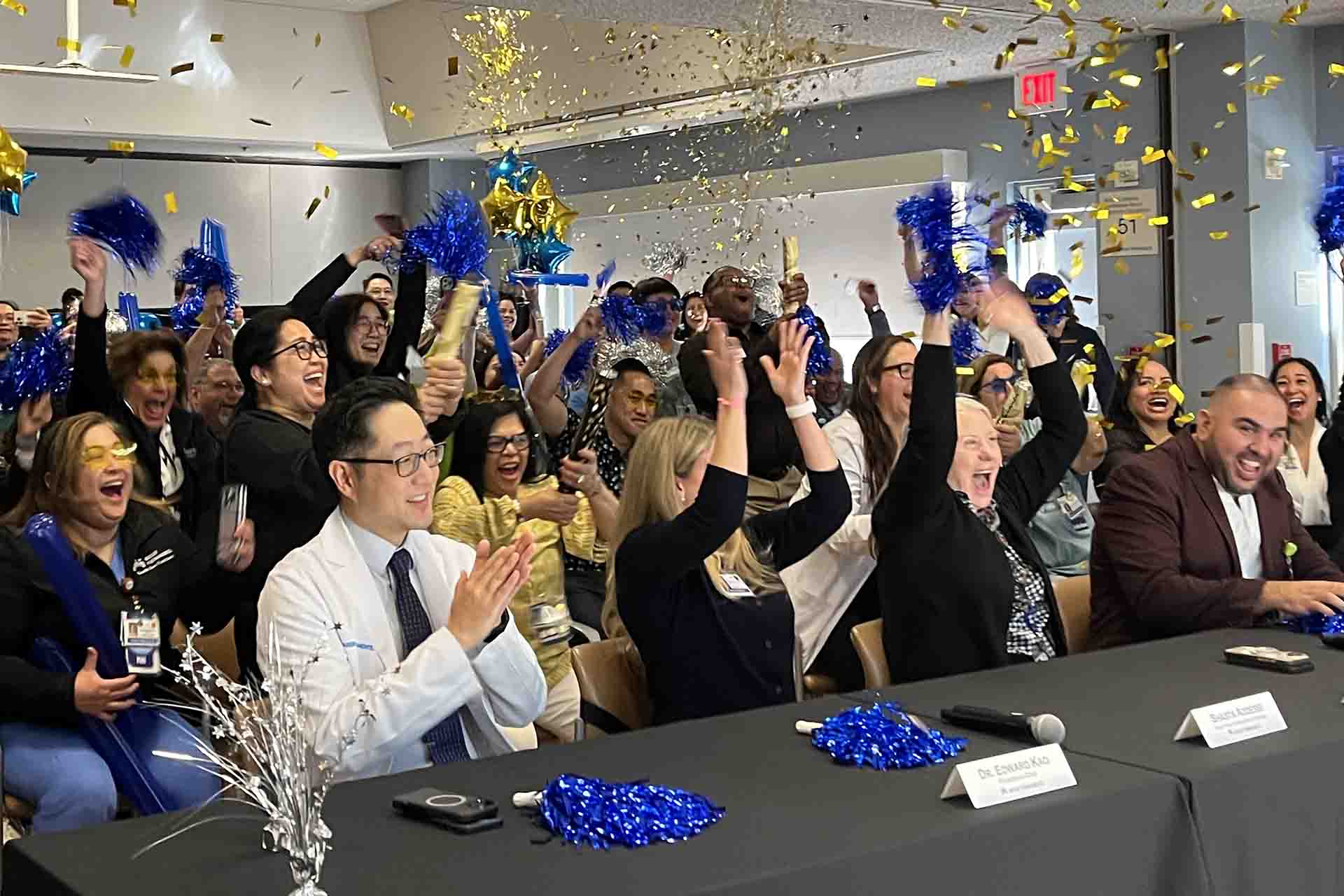
At the open house in early August, Benson Yeung, senior director of regional Patient Care Services, noted the opportunities for innovation, collaboration, discovery, and education.
“This is more than a building,” he said to a crowd of more than 100 leaders, physicians, nurses, and other clinicians. “It’s a place where confidence will be built, skills will be refined, teams will become strong, and the next generation of health care professionals will be inspired to provide extraordinary care.”
Iris Young, senior director of TMPG Patient Safety who is overseeing the center with Benson, echoed his sentiment. She added: “The SIM Center serves as a hub for expert instruction with innovative technology to support teams and medical centers, especially those that may not have these resources on their own. Through in-person, virtual, and tele-facilitated training, it expands equitable access to standardized and high-impact simulation training across the system.”
Simulated emergencies, real expertise
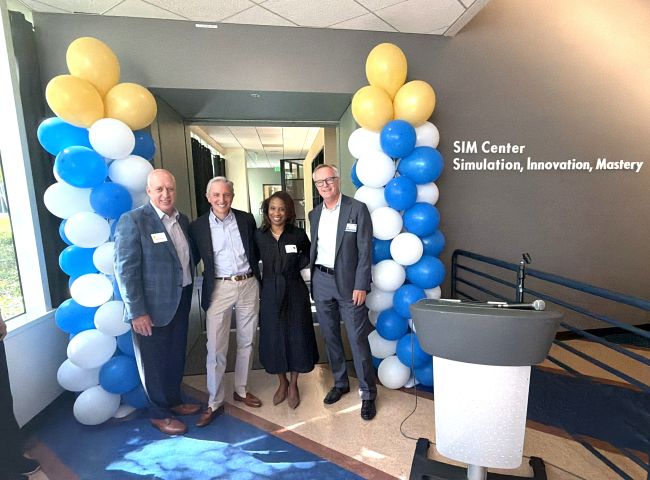
The center features several customizable simulation rooms. At the open house, one featured a virtual reality experience that allowed participants to use avatars to step into realistic scenarios, helping them build skills in handling difficult patient conversations and managing emergency situations.
The other simulation rooms feature full-body or partial-body simulators of adult, child, and baby. The rooms include beds or gurneys, monitors, and other medical equipment to create realistic settings.
In addition, there are multiple designated debrief rooms, where teams can gather after a training session to discuss key takeaways, what went well, and what can be improved. There’s also a technology room, where procedural skill trainings can take place using various types of technologies, including life-like models called task trainers or models generated from 3-D printing.
New spaces are being added, including another simulation room dedicated to operating room, perioperative, and outpatient clinic rooms.
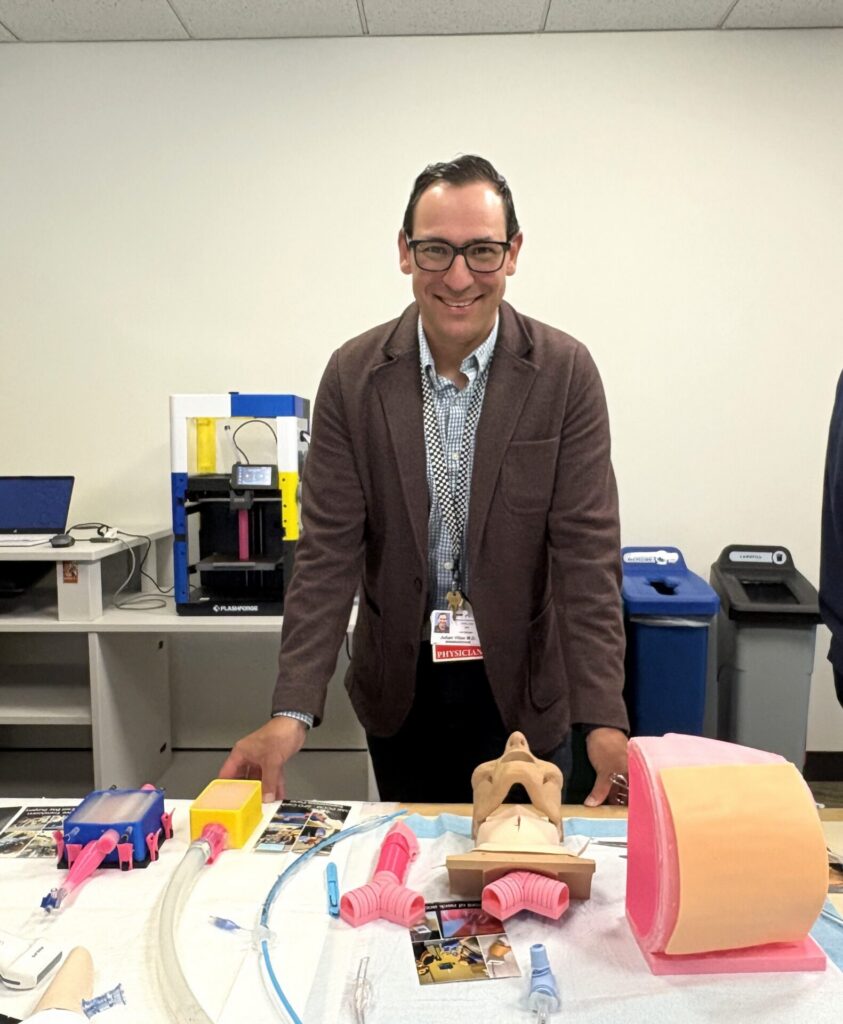
During the open house, Julian Villar, MD, who works at the intensive care unit at Kaiser Permanente in Oakland, brought in his personal 3-D printer to demonstrate the possibilities.
“In my practice, we have high-stakes situations,” Dr. Villar said. “Having a safe place to practice, make errors, and learn from them is so important.”
Stephen Parodi, MD, associate executive director of The Permanente Medical Group, noted that the center is tucked inside a spacious campus with trees and lawns, making the atmosphere conducive for learning and having vulnerable conversations. There’s also the ability to simulcast for those who can’t be there in person.
The center, Dr. Parodi said, reflects the organization’s commitment to excellence, quality, and safety.
“To be successful in that endeavor, we must come together to share our lives and learned experiences,” he said. “We can bring the power of technology to scale expertise beyond this SIM Center’s physical location, so that we can improve our patients’ and professionals’ lives like never before.”