

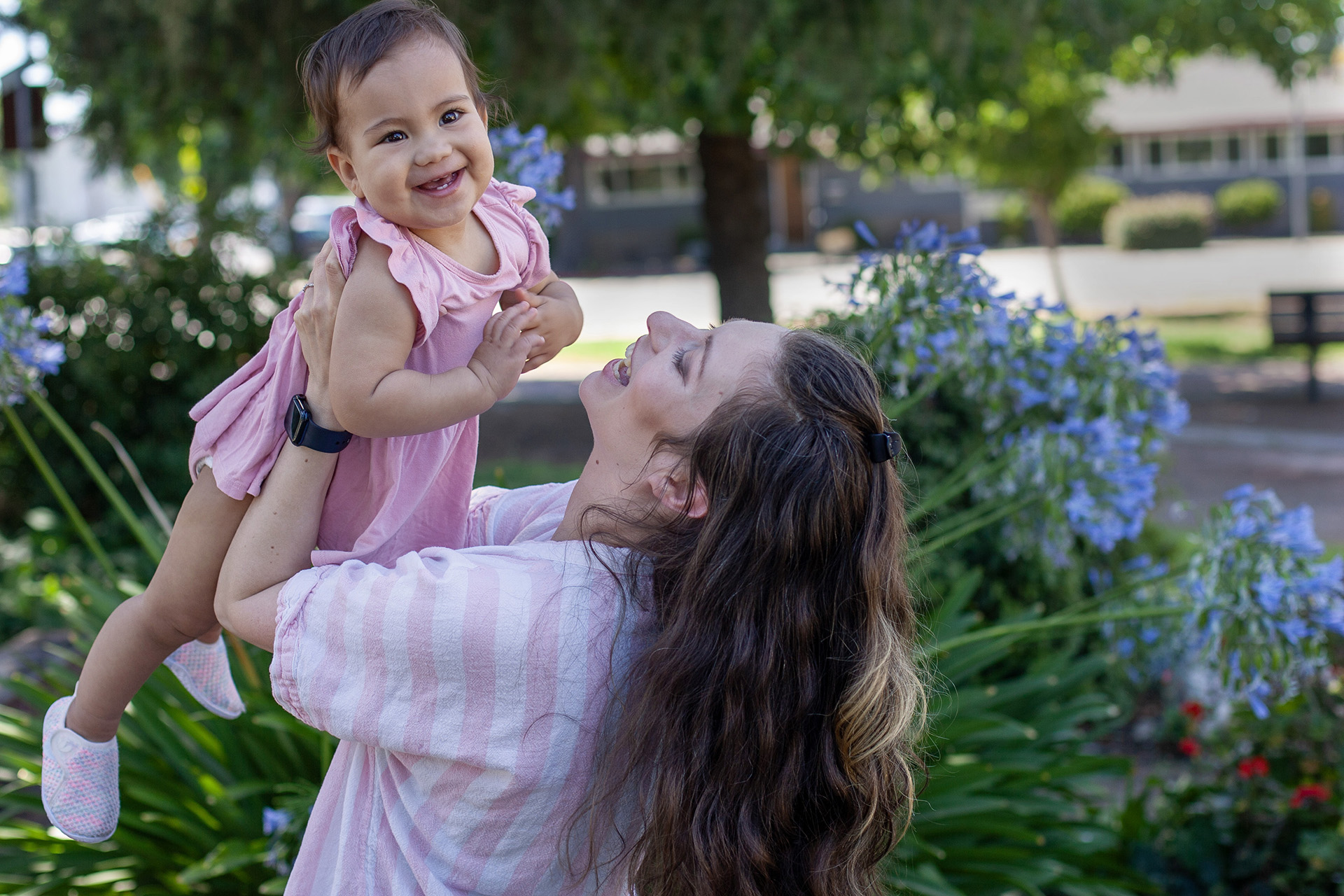
Christine Graham was pregnant with her first child when she made a decision that would save a life.
She agreed to donate her umbilical cord blood, making it available to a stranger who needed a stem cell transplant.
“I don’t think I’ll fully grasp what that has done for someone,” said Graham. “I try to imagine it.”
Graham first learned about cord blood options at the Kaiser Permanente San Leandro Medical Center while she was making her birth plan. Her doctor explained the blood inside the cord can be saved, or banked, for later use. Umbilical cord blood contains stem cells, which can be used to treat blood cancers, such as leukemia and lymphoma, and other immune system disorders.
The process is painless for mom and baby, and the umbilical cord is usually discarded as medical waste.
“The research was originally what I was drawn toward,” said Graham, a high-school biology and anatomy teacher who lives in Livermore. “I knew that if someone else could benefit, I would absolutely do it.”
The San Leandro Medical Center is one of the only Kaiser Permanente hospitals on the West Coast to offer this donation program, partnering with the Cleveland Cord Blood Center. The center collects, stores, and distributes cord blood to patients across the country with life-threatening illnesses.
Michelle Gebhardt, MD, a specialist in obstetrics-gynecology at the Kaiser Permanente San Leandro Medical Center and assistant chief for Outpatient Maternity, helped form the partnership in 2021. She said San Leandro was chosen because of its residents’ ethnic diversity.
“Patients from diverse ethnic backgrounds often have a more challenging time finding a suitable matched donor,” said Dr. Gebhardt. “Adding donated cord blood from diverse communities like ours to the registry increases the likelihood that every patient will find a life-saving match.”
She explained the program is completely voluntary for birthing parents. After eligibility is verified, a sample of the birth parent’s blood will be taken for testing, and the cord blood is collected during delivery.
“From San Leandro it goes to the Cleveland Cord Blood Center where it is evaluated to see if it can be processed and saved for transplant,” Dr. Gebhardt explained.
Graham gave birth to her daughter, Charli, in May of 2024. Less than a year later, she found out her donation had been matched with a leukemia patient and used for a life-saving stem cell transplant.
“Charli’s part Native American. I was like, what are the odds of her being a match for someone?” Graham said.
Cord blood donations make up 17% of transplants for those with a Native American background, according to according to the National Marrow Donor Program..
“I’m just proud and happy that it worked for someone,” Graham said.
Dr. Gebhardt said since the program started, hundreds of people have donated blood to the program with 45 of those being deemed suitable. So far, 2 of those 45 have been used for transplants.
“Our team is so incredibly proud of this program and our partnership with the Cleveland Cord Blood Center, and it reflects our commitment to our mission of equity,” said Dr. Gebhardt.
Charli, now 1, is healthy, loves books, and waves at everyone she sees. “We joke she’s like the welcome wagon,” Graham said.
Graham said this donation will always be a part of Charli’s story, and she looks forward to telling her about it one day. “Just knowing that is how Charli was brought into the world … it’s nice that we started off with a lot of positivity for someone. I’m proud that this is a part of who she is already.”