


More Northern California medical centers are using a relatively new minimally invasive technology for detecting lung cancer earlier, when it’s easier to treat.
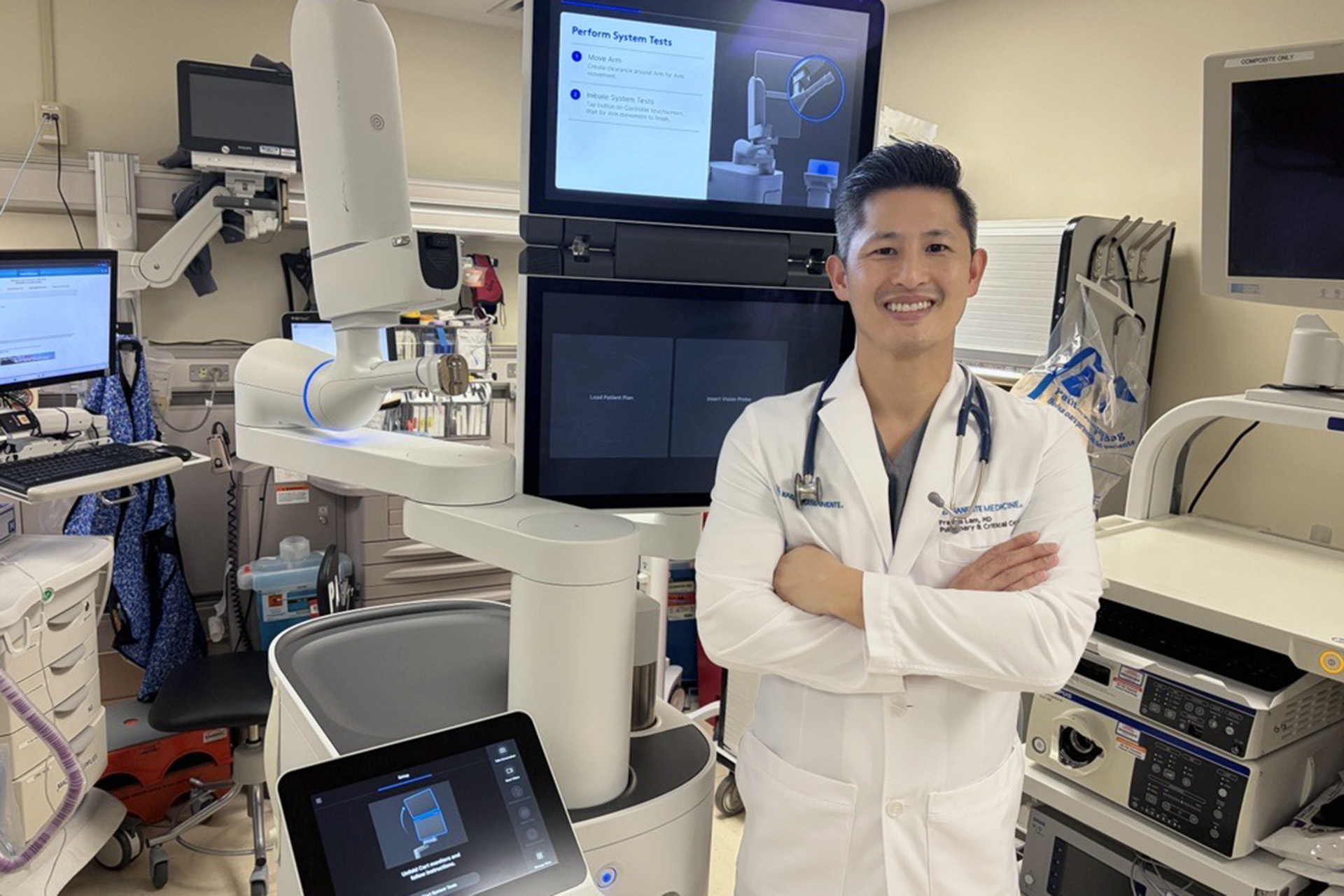
Called the Ion Endoluminal System, the robotic-assisted bronchoscopy technology can collect smaller, difficult-to-reach lung growths, or nodules.
Jeffrey Velotta, MD, a thoracic surgeon at Kaiser Permanente in Oakland, said the new tool is a welcome advancement.
“Innovations like the Ion robotic‑assisted bronchoscopy system are changing how we diagnose lung disease, allowing both pulmonologists and surgeons to reach challenging nodules with a level of accuracy we didn’t have before and fewer complications,” Dr. Velotta said.
The South Sacramento Medical Center is the latest medical center to adopt the Ion system. It had already been introduced at Kaiser Permanente at 4 other locations: Roseville, Santa Clara, Modesto, and Oakland. Four others, Fremont, Antioch, Fresno, and Vallejo, have plans to acquire this technology.
Ion Robotic Bronchoscopy provides physicians with a computer-generated map of the patient’s airways and a navigational path, as well as a small flexible catheter that is guided toward a suspicious nodule. This allows for the biopsy of lesions that previously may have been inaccessible with conventional bronchoscopy. The Ion Endoluminal System was approved by The Food and Drug Administration in 2019, and it has been widely adopted industrywide in the past several years.
Francis Lam, MD, Pulmonary Medicine, South Sacramento calls the Ion technology “exciting,” leading to better patient care and outcomes.
“Lung cancer is the leading cause of cancer death in the U.S. and diagnosing it at an early stage is often challenging,” Dr. Lam said. “Symptoms typically don’t occur until late stage when we often see worst outcomes for patients. With this Ion system, we’re improving our ability to evaluate suspicious lung nodules much sooner.”
The Ion platform fits into how a medical center already finds and evaluates possible lung cancer. When a lung nodule shows up — whether on a low‑dose CT scan or another type of imaging — doctors look at things like its size, where it’s located, and the patient’s overall health to decide whether Ion is a suitable next step.
The first stage of the Ion program is to assist in diagnosing lung cancer but the capabilities promise to expand.
“In the future, we hope to be able to both diagnose early-stage lung cancers with the system and remove cancer in the same anesthetic event,” Dr. Lam said.