

Kaiser Permanente is hosting an adaptive vehicle show for people with disabilities at the Vallejo Medical Center on September 13.
The event will showcase modified cars, bikes, and recreational vehicles. Adaptive cars include those with hand-operated breaks and accelerators, wheelchair stowage modifications, and ramps. The modifications help people who might otherwise have challenges driving standard cars.
The Adaptive Car Show and Transportation Expo is from 11 a.m. to 2 p.m. in the parking lot of the Vallejo Medical Center and is sponsored by the Kaiser Foundation Rehabilitation Center.
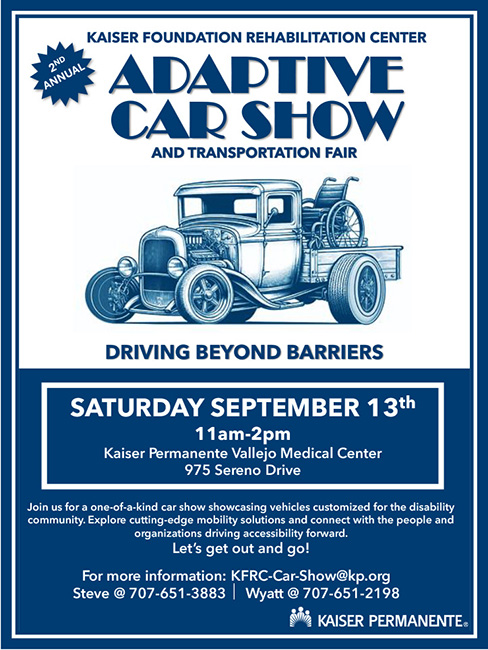 In its second year, the show is for people who have lost limbs, use wheelchairs, or who recently have had a change in physical or neurological status. Last year’s show also featured a modified dirt race car, adaptive bicycles, and a truck modified for camping.
The event was created by Steve Schmidt, Physical Therapy manager at the rehabilitation center, and Wyatt Smith, director of Rehabilitation Services. Inspiration for the show grew from the rehabilitation team’s long-term goal of highlighting transportation and accessibility options for the community.
“We created this event because one of the biggest barriers for patients to get back to their lives after suffering an event that requires rehabilitation is transportation,” said Schmidt. “How can they go back to work or caring for their families if they can’t drive? We wanted to have a show to give them access to vendors who can make adaptations allowing them to drive again.”
Schmidt considered last year’s show a “fantastic success” with a large portion of hospital patients and families visiting.
“They were able to go down and see the cars and connect with other people who went through rehab who are now using adaptive cars,” said Schmidt. “That really gave a lot of our patients hope and inspiration.”
One of the most common car modifications is hand controls to work the accelerator and breaks instead of feet-based accelerators and breaks. Other modifications are for wheelchair storage, wheelchair tie-downs so a person can drive a car while sitting in a wheelchair, wheelchair ramps, and hydraulic lifts to get a person into the car.
Schmidt said some patients’ change in physical or neurological status requires them to be recertified by the Department of Motor Vehicles to drive either a standard or modified car.
“We just want to see our patients be successful in the community,” said Schmidt. “It’s been hard in the past seeing people who were not aware of the options, or they didn’t know that vehicles could be modified for them.”
The show will have accessible restrooms, parking, and food vendors.
For more information on the show or for information on bringing and showing your adaptive vehicle email kfrc-car-show@kp.org.