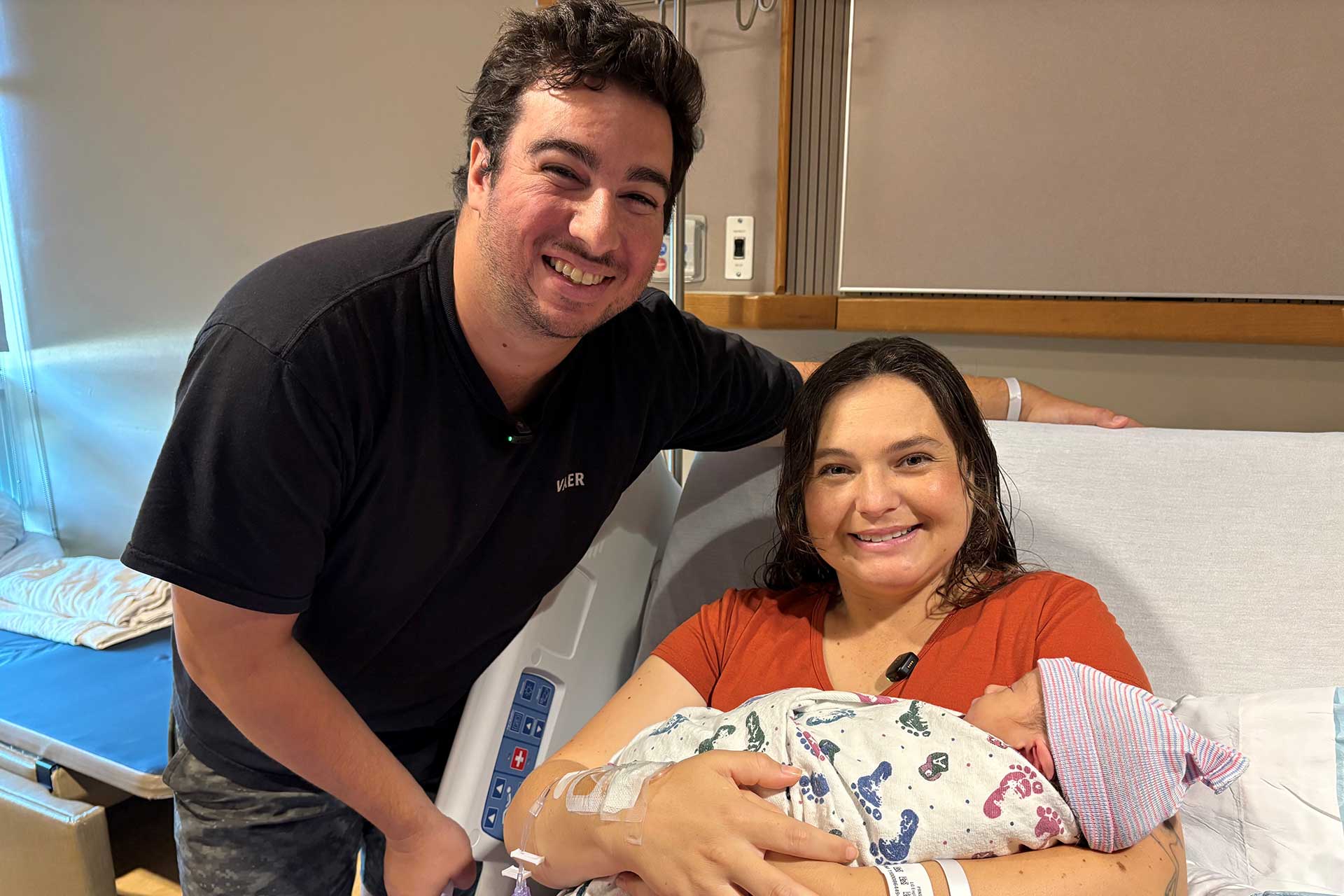



Lesley Jaime, 24, recently gave birth to her son, Juan, at the Kaiser Permanente Modesto Medical Center.
Learning to breastfeed was a top priority when preparing to be a first-time mom.
“I felt very strongly about breastfeeding and was hoping that I would be capable of doing it,” said Jaime.
Kaiser Permanente supports and encourages families to breastfeed. Studies show breastfeeding provides a range of health benefits for both the birthing parent and baby. It strengthens the baby’s immune system, reduces risk of certain diseases, and supports bonding between parent and baby. Parents who breastfeed have reduced risk of breast cancer, ovarian cancer, and type 2 diabetes. Other recent studies found people who have breastfed in their life have reduced risk of coronary heart disease, and stroke.
Expressing milk before baby arrives
To prepare for her son’s birth, Jaime started what’s called “antenatal hand expression” at 37 weeks. The process involves stimulating the breast and gently expressing first, nutrient-dense milk called colostrum. Colostrum can be frozen, stored, and used later to feed the baby after birth.
Jaime said it wasn’t easy at first. “For me, it was difficult and frustrating not seeing a huge volume output. I kept pushing through knowing that any little amount would benefit my baby tremendously.”
Some Kaiser Permanente physicians say early hand expression helps families feel more prepared when their babies arrive.
Lauren Spieler, DO, a family medicine physician and breastfeeding medicine physician at Kaiser Permanente Santa Rosa, said it can also reduce the need for supplementing with formula or donated milk.
“Hand expression is very good at getting out that colostrum, more than even pumps are,” said Dr. Spieler.
Although some people produce only drops, or none, the practice can still improve later milk supply and confidence for breastfeeding, Dr. Spieler said.
Jaime expressed twice a day and was able to collect a small amount each session. She stored the expressed milk. “Thankfully, I did this because my baby did end up using all of it within my 3-day stay at the hospital.”
Maternal Confidence
“Maternal confidence is probably the most important potential benefit of antenatal hand expression,” said Kristin Steuerle, MD, a Kaiser Permanente Santa Rosa pediatrician who was the regional newborn co-director for the past 12 years.
To reduce the theoretical risk of preterm labor, hand expression should only start in late pregnancy, typically during the 37th week, Dr. Steuerle said.
“Hand expression has been studied extensively postnatally where it increases milk supply,” said Dr. Steuerle. “It can double your milk supply by day 7.”
Pilot studies suggest that antenatal hand expression also increases early milk supply.
Dr. Steuerle explained that while the practice is safe, it’s important to speak with a doctor before trying. Antenatal hand expression is not recommended for patients with certain conditions, including placenta previa or abruption, severe fetal growth restriction, or those with more than 2 prior cesarean sections.
Support for other breastfeeding challenges
Kaiser Permanente offers a variety of breastfeeding support, including lactation consultants, inpatient help from postpartum nurses, advice lines, and prenatal classes.
“Breastfeeding is a natural process, but it’s not always an instinctual process,” said Dr. Spieler. “It’s something that requires help often.”
Jaime, the new parent who started expressing milk before she delivered, needed help with latching after her baby had a stay in the Neonatal Intensive Care Unit. “It can be exhausting to keep up the baby’s needs,” Jaime said. “However, knowing that I need to provide for my baby helps push me to continue.”
View videos on breastfeeding.