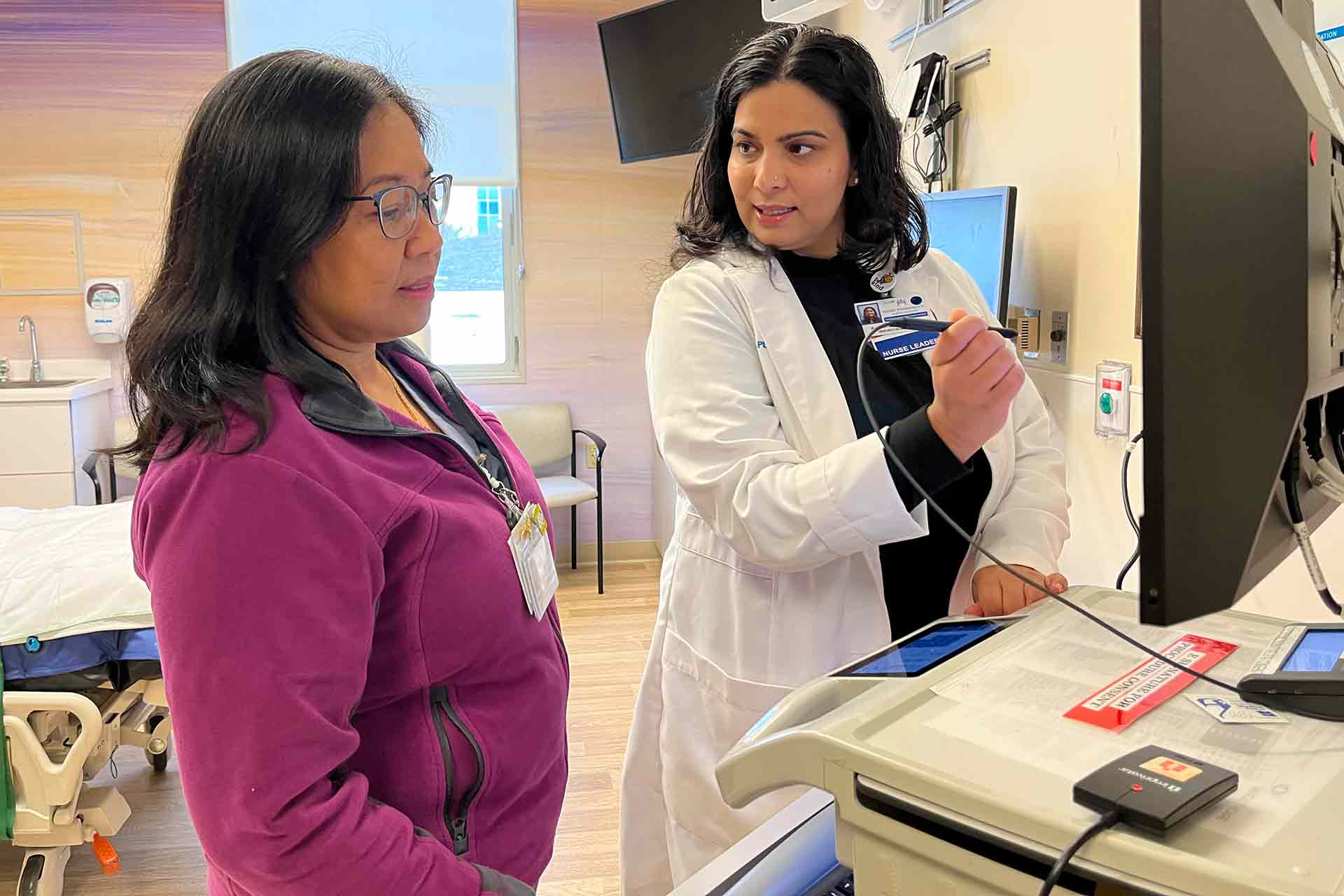


Colorectal cancer is the second leading cause of cancer deaths in the U.S., but screening for it saves lives.
Cancer screenings can find colorectal cancers when they are small and easier to treat. Colorectal cancer screening can also prevent cancers from developing through the removal of precancerous polyps.
Three new studies show how Kaiser Permanente doctors and researchers are working together to continually improve cancer screening — and save lives.
A groundbreaking screening program
Kaiser Permanente uses its electronic medical records to identify members eligible for colorectal cancer screening and sends them a fecal immunochemical test (FIT) for at-home testing. Members can choose to do the FIT test or have a screening colonoscopy.
A recent study, presented at the Digestive Disease Week conference, examined the program’s impact. It showed that since the program was started in 2006, one-third fewer Kaiser Permanente members have been diagnosed with colorectal cancer, deaths have been cut in half, and racial differences in outcomes have been eliminated. This study, which was larger and more in-depth than previous ones, confirmed other research findings.
“Our study shows that consistent and comprehensive screening outreach to all eligible members, with no in-person visit required, can make an extraordinary difference,” said Douglas Corley, MD, PhD, chief research officer for The Permanente Medical Group and a research scientist at the Kaiser Permanente Division of Research, who led the study.
Start screening at 45
In 2021, the U.S. Preventive Services Task Force updated its recommendations for colorectal cancer screening to begin at age 45 rather than age 50. Because Kaiser Permanente had its screening program in place, it was able to easily identify the members who were now eligible for screening — and study how the screening at any earlier age made a difference, if any.
The research, published in June in JAMA, provided more support for starting to screen at 45. The initial screening colonoscopy in the younger adults found pre-cancerous polyps and cancers at a rate similar to those seen in adults ages 50 to 54.
“Currently, screening rates remain lower for people under 50 compared to those ages 50 to 75,” said senior author Theodore R. Levin, MD, a DOR research scientist and gastroenterologist. “We want these younger adults to be aware that a FIT test is highly effective in identifying people at increased risk for polyps and colon cancer — and that only those who have a positive FIT test need to have a colonoscopy. This option may be more acceptable for many younger adults.”
Colonoscopy follow-up after 75
There are currently no specific guidelines that address whether an older patient who previously had polyps removed should continue to have follow-up colonoscopies after age 75.
Kaiser Permanente researchers used electronic medical records to assess the procedure’s risks in older adults.
Their research, published in May in Clinical Gastroenterology and Hepatology, found that these colonoscopies were safe for this age groups, and suggests that age should not be the determining factor in deciding if the procedure is needed.
“The fact that we saw very few complications in older adults in our study suggests that after age 75 the decision to have a colonoscopy for follow up after a polyp had been removed should incorporate patient preference, prior colonoscopy findings, and the patient’s current overall health — and not only their age,” said study author Jeffrey K. Lee, MD, MPH, a Kaiser Permanente gastroenterologist and research scientist.